The MacBook Pro Family, 2025-2026: Models, Changes, and Differences
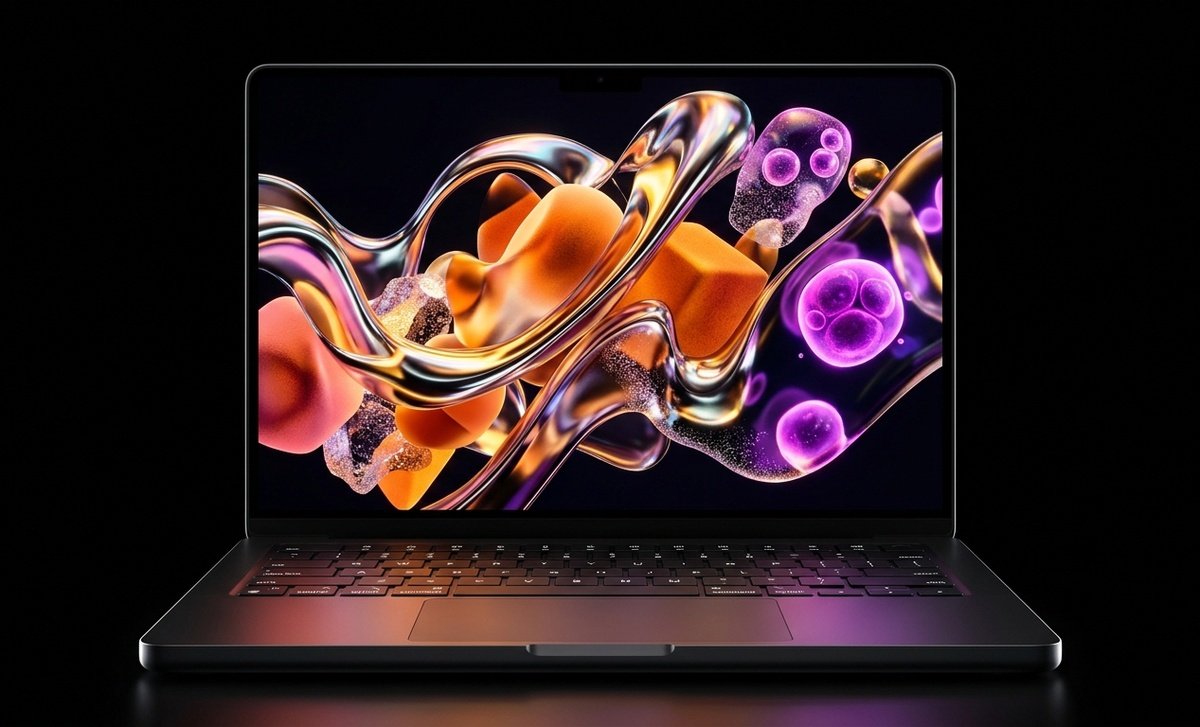
Introducing the MacBook Pro Lineup
What changed in the MacBook Pro family between 2025 and 2026? The MacBook Pro family changed in several ways during 2025 and 2026. Apple updated the entry-level chip, expanded the Pro and Max options, and introduced a new display platform.These changes go beyond processing power: the same lineup now offers different experiences in work, mobility, connectivity, and interaction with content. Understanding the family means separating changes to the processor from changes to the computer itself.
The first milestone was the 14-inch MacBook Pro with M5, announced in October 2025. The second came in March 2026, with 14-inch and 16-inch M5 Pro and M5 Max models.In October 2026, Apple introduced M6 in the conventional 14-inch model and, separately, PROLED XDR with tandem OLED and touch on M5 Pro/Max models. This timeline shows that chip numbers and display generations are not equivalent.
That distinction changes how model names should be read. M6 has a 12-core CPU and a 12-core GPU, while the documented M5 Pro and M5 Max configurations for the larger model offer an 18-core CPU with different GPU options. Core counts describe the available architecture, but do not directly measure export, compilation, or rendering times.
In the MacBook Pro family, chip generations and product generations no longer move together. Your workload matters as much as the release year.
Identify what actually changed between MacBook Pro releases
A newer chip name alone does not tell you whether exports or builds will finish sooner.
M5, M6, Pro, and Max Mean Different Things
The starting point is measurable. The 2025 MacBook Pro with M5 has a 10-core CPU, a 10-core GPU, and 153 GB/s of memory bandwidth. The 2026 M6 has a 12-core CPU and a 12-core GPU.Its bandwidth depends on the configuration: 153 GB/s with 16 GB of memory, or up to 170 GB/s with 24 GB or 32 GB. These specifications indicate additional resources, but do not establish proportional speed gains.
The step up in category is clearer in the professional models. Apple's specifications for the 16-inch M5 Pro list an 18-core CPU, a 20-core GPU, and 307 GB/s of memory bandwidth.The same documentation lists an 18-core CPU for M5 Max, with 32-core or 40-core GPUs and 460 GB/s or 614 GB/s, depending on the variant. Saying that Max is faster in every task would be inaccurate: the main expansion documented here concerns graphics and data transfer.
Memory capacity also needs to be matched to the correct configuration. The 16-inch M5 Pro supports up to 64 GB of unified memory, while M5 Max with a 40-core GPU supports up to 128 GB. That ceiling may matter for large scenes, libraries, and local models, but it is a configuration limit, not measured application usage.For a developer compiling projects or an editor exporting video, the benefit depends on actual workload data, not simply a job title.

Before treating the numbers as performance results, consider which tasks require sustained processing and how much memory they actually use.
Memory bandwidth is not rendering time: results depend on the application and the sustained workload.
Liquid Retina XDR or PROLED XDR: What Changes?
The display differences have verifiable specifications. Apple's technical sheet for the 14-inch M6 lists Liquid Retina XDR, a 1,000,000:1 contrast ratio, and 1,600 nits of peak HDR brightness.For the October 2026 PROLED XDR models, Apple states tandem OLED, a 10,000,000:1 contrast ratio, and up to 2,000 nits of peak HDR and SDR brightness. These are manufacturer specifications and brightness claims, rather than independent test results obtained under identical conditions.
The change also introduces touch input, which is absent from the Liquid Retina XDR configuration described here. Apple cites specific applications in Final Cut Pro, Logic Pro, and Pixelmator Pro as examples of the new workflow.A photographer examining contrast on the laptop may appreciate the visual benefits, while someone working primarily with external monitors may place less weight on the built-in panel. The feature's availability does not, by itself, demonstrate time savings in every task.
Ports and external displays provide another concrete distinction between categories. The 14-inch M6 has three Thunderbolt 4 ports, HDMI, SDXC, and MagSafe 3, with support for up to two external displays.The 16-inch M5 Pro and M5 Max configurations have three Thunderbolt 5 ports, HDMI, SDXC, and MagSafe 3, supporting up to three or four external displays, respectively.For a workstation with multiple monitors, this connectivity limit is more directly verifiable than a general productivity promise.
Consider how the display and form factors may affect future workflows
External displays: two on M6; up to three or four on M5 Pro/Max, depending on the variant.
Does the Price Reflect the Display or Performance?
The differences also appear in the US list prices Apple announced in March and October 2026, rather than in current retail offers. In March, the 16-inch MacBook Pro with M5 Pro and Liquid Retina XDR started at $2,699.In October, the 16-inch M5 Pro model with PROLED XDR started at $3,399. These announcements come from different dates and serve as historical references, not current purchase quotes.
Subtracting the list prices, $3,399 minus $2,699, gives $700. This difference can be understood as a platform transition premium: it accompanies the display change, but also changes in design, construction, and other features.It does not represent the isolated cost of the OLED panel or establish an equivalent performance improvement. The calculation helps put the financial impact of the product-platform transition in perspective.
The $700 difference does not isolate the display's price or compare retail offers from the same day. It highlights an important feature of the lineup: two MacBook Pro models can use processors in the same category yet offer different experiences. For someone working mostly with external monitors, some built-in display benefits may matter less.
For someone relying directly on the laptop's image quality and touch interaction, they may matter more. Price adds another dimension, but does not determine suitability on its own.
What Still Matters After Launch?
Understanding the MacBook Pro family requires looking beyond the processor, display, and starting price. Unified memory capacity, connectivity, battery life, and repair options shape the experience over time.The M5 teardown published by iFixit in October 2025, updated after a new battery procedure in December, shows why repair accessibility should be assessed separately from performance. These characteristics are part of the computer, although their importance varies with each person's routine.
A professional who works in different locations every day may prioritize battery life and weight. Someone using an office with connected monitors and accessories has different needs.For computationally intensive tasks, sustained performance over long sessions may matter more than responsiveness in short operations. Usage profiles are not rigid categories: a student may run heavier workloads than an experienced professional, while a creator may work comfortably with a less advanced configuration.
Software evolution is another, less predictable variable. Local AI tools, complex audiovisual projects, and new application versions can change memory and processing demands.However, there is no universal progression that predicts when a particular computer will stop meeting someone's needs. The usage profiles discussed throughout this article help identify practical differences, rather than establish a permanent ranking of the models.
One variable remains beyond what launch specifications can resolve: how applications and user needs evolve. That relationship becomes clearer over time, as new projects and habits reveal which features of the computer actually matter in everyday use.
Find the right Mac for you
Answer 6 questions. Avoid buying the wrong Mac
1 of 6 Questions
When you're working, what usually happens?
Multitasking habits
This site contains affiliate links. We may earn a commission from qualifying purchases.